

















 English
 Français
 Deutsch
 Português
 Español
 русский
 한국어
 العربية
 Italiano
 Indonesia
 Schweiz
 Polski
 Nederlands
 ישראל - עברית
 Perzisch
 ไทย
 日本語
 ኢትዮ-አማርኛ
 Việt Nam
 Kiswahili
 Srpski
 Ελληνικά
 繁體中文
Reducing Outdoor Fan Noise on Heat Pumps
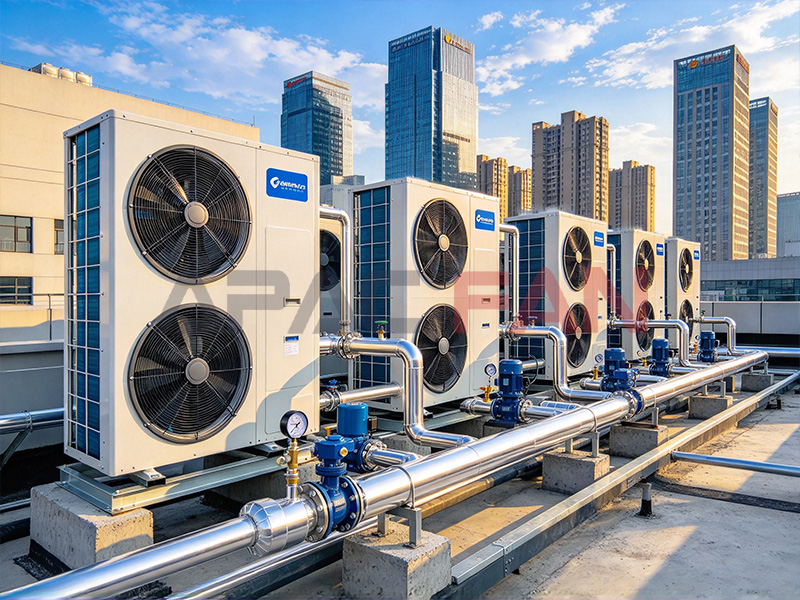
11/12/2026Outdoor heat pump noise can come from several sources, including airflow, the fan assembly, compressor and vibration transmitted through the structure. Identifying when and where the sound occurs helps prevent unnecessary fan replacement and supports a more effective assessment.
Listen across operating conditions
Record whether the noise changes at startup, at high heating demand or during defrost. A temporary change in sound can be associated with a normal change in operating mode, but new scraping, rattling or persistent vibration deserves inspection by a qualified technician.
Compare conditions at similar outdoor temperatures and fan speeds where possible. A unit operating at a higher load may sound different from the same unit at a lower load.
Examine the airflow path and mounting
Restricted inlet or discharge space can change airflow around the fan. Leaves, damaged guards or nearby barriers may contribute to unusual sound. Maintain the manufacturer's specified clearances and arrange inspection with the equipment safely isolated.
Loose panels, brackets or mounting hardware may transmit vibration to the building. Wall brackets and nearby rigid surfaces can affect the sound experienced indoors or at neighboring spaces. The source should be confirmed before adding isolation or altering the installation.
Compare acoustic data carefully
Sound power describes the acoustic energy emitted by a source under specified conditions. Sound pressure describes the sound at a particular measurement location and is affected by distance and surroundings. Values measured using different methods or at different operating points should not be compared as if they were equivalent.
Reducing fan speed may reduce fan-related sound, but it can also reduce airflow. Any control adjustment must maintain the heat pump's required operating conditions and remain within manufacturer limits.
Replacing a noisy fan
Confirm the cause and record the exact fan reference, dimensions, electrical and control connections. A quieter catalogue value alone does not establish that a replacement will be compatible or quieter in the installed unit. APAC FAN can review the available specifications when you provide the equipment details and your email or WhatsApp number.
Identify the type of sound
A steady rushing sound can be associated with air moving through the fan and surrounding openings. A tonal sound may be associated with rotating components or aerodynamic interaction, while rattling may indicate a loose cover or mounting. These descriptions are clues rather than definitive diagnoses: the compressor, refrigerant circuit and building structure can also contribute to what a listener hears.
Record whether the sound is new, whether it changes with the operating mode and whether it is heard outside, indoors or both. A short recording can help a service provider understand the complaint, but it cannot replace a physical inspection and appropriate measurements. Avoid approaching moving components or removing covers while the unit is energized.
Operating speed and aerodynamic noise
Fan sound changes with operating point. As speed rises, the fan moves more air in a given system and may produce more aerodynamic noise. The installed result also depends on the blade, guard, heat exchanger and airflow path. An obstruction near the inlet or discharge can create disturbed airflow that changes the sound character.
A lower speed is useful only if the heat pump can still operate within its specified airflow and temperature conditions. Any adjustment belongs within the manufacturer's control strategy. A permanent speed reduction made only to suppress sound may affect heating performance or protective operation.
Unit placement and nearby surfaces
Walls, fences, corners and overhangs affect how sound reaches nearby spaces. Hard surfaces can reflect sound, while a constrained enclosure may also interfere with airflow. Placement should therefore consider both acoustics and the manufacturer's required service and ventilation clearances.
Before adding a barrier, examine the path from the source to the listener and the route the unit needs for intake and discharge air. A barrier that blocks the noise path but causes air recirculation can change heat pump operation. A qualified designer can assess both effects for the actual site, local requirements and equipment.
Vibration paths into the building
A fan or compressor can transmit vibration through mounting brackets, pipework and the supporting structure. The sound heard indoors may be more noticeable than the sound directly beside the fan. Inspect for loose fixings, damaged mounts or contact between a panel and a vibrating component. The correct remedy depends on the source and the manufacturer's installation requirements.
Isolation products should be selected for the load and installation rather than added indiscriminately. Changing mounts or pipe supports can affect stability and service access. A technician should verify that the equipment remains securely supported and that all connections remain suitable after any modification.
Reading fan sound specifications
Sound power and sound pressure describe different quantities. Sound pressure changes with distance, measurement environment and direction. Sound power data is useful for comparing sources when measured using comparable procedures, but it does not directly predict the sound level at a bedroom window.
Compare values at the same fan speed or duty, with the same measurement method and relevant frequency information where available. A single overall decibel value may hide a tonal component that people find noticeable. The complete unit's sound data is usually more useful for a site assessment than a bare fan figure alone.
When fan replacement is appropriate
Replace a fan when inspection confirms a defect or when an engineered change is approved for the equipment. Capture the original part number, mounting, control interface and performance requirements. A visually similar fan may differ in blade profile, operating point or response to the controller.
After replacement, verify the normal heating and defrost modes, check for abnormal vibration and compare sound under similar conditions. APAC FAN can help review product specifications for a compatible replacement when the equipment and existing fan details are available.
Establish a useful baseline
Before making changes, document the equipment model, operating mode, approximate weather conditions and the place where the sound is most noticeable. If professional acoustic measurements are needed, use a consistent measurement method and record background sound. Comparing a busy daytime reading with a quiet nighttime reading can produce a misleading impression of equipment change.
After a repair or adjustment, repeat the assessment at a comparable operating condition. An accurate comparison helps determine whether the work reduced the specific sound that prompted the complaint. It also helps identify whether another component, such as a vibrating panel or compressor mount, still needs attention.
Compare alternatives at the same duty
When reviewing alternative fans, ask for performance and acoustic information at the required installed airflow and pressure. A fan that appears quieter at a low speed may not meet the heat pump's duty at that setting. Compare the candidates at equivalent operating conditions and include the effect of the guard and housing where documented.
The selection should also preserve electrical compatibility and the original control sequence. A useful acoustic improvement is one that can be verified while the complete heat pump continues to operate within its specified heating range.