
















 English
 Français
 Deutsch
 Português
 Español
 русский
 한국어
 العربية
 Italiano
 Indonesia
 Schweiz
 Polski
 Nederlands
 ישראל - עברית
 Perzisch
 ไทย
 日本語
 ኢትዮ-አማርኛ
 Việt Nam
 Kiswahili
 Srpski
 Ελληνικά
 繁體中文
EC Fan Speed Control in Heat Pump Heating Systems
11/11/2026An EC fan can provide adjustable airflow when its motor and controller are designed for variable-speed operation. In a heat pump, the outdoor fan is part of a coordinated system: the controller may adjust its operation as temperatures, compressor operation and heating demand change.
What the controller needs to manage
The heat pump controller uses the inputs and operating logic specified by the equipment manufacturer. Depending on the design, these can include temperature readings, compressor status and protective functions. A speed command should support the required operation of the complete heat pump, including startup, normal heating and defrost.
A change in fan speed alters the fan operating point and can change sound and electrical input. The result depends on the fan, coil and controls. Fixed savings or a guaranteed noise reduction cannot be inferred from the presence of an EC motor alone.
Check the control interface
An EC fan may accept an analog signal, a digital interface or another specified control arrangement. Confirm the signal type and range, enable behavior, electrical isolation requirements and any speed or fault feedback. Not every EC fan supports every control method.
Compare these requirements with the existing heat pump controller and wiring. A separate interface may be necessary, but any proposed integration must be verified for the actual fan and equipment. Check the fan's power supply and protection requirements independently of the control signal.
Verify performance across operating modes
The minimum commanded speed should still support the system's required operating conditions. Also review maximum speed, response to sensor failure and behavior following power interruption. Testing should follow the equipment manufacturer's commissioning procedure and be performed by qualified personnel.
Where energy performance is being evaluated, measure fan and system operation over representative conditions. A single fan power reading does not capture compressor, defrost and seasonal effects.
Discuss the control requirements
For APAC FAN selection support, share the fan part number, supply voltage, wiring diagram, control signal and heat pump reference. Include an email or WhatsApp number so the specifications can be reviewed against the intended application.
How speed control fits the heat pump
An EC fan combines an electronically commutated motor with associated electronics. Depending on the product, the electronics may be integrated with the motor or supplied in another configuration. The equipment controller can request an operating speed within the range and interface supported by the selected fan.
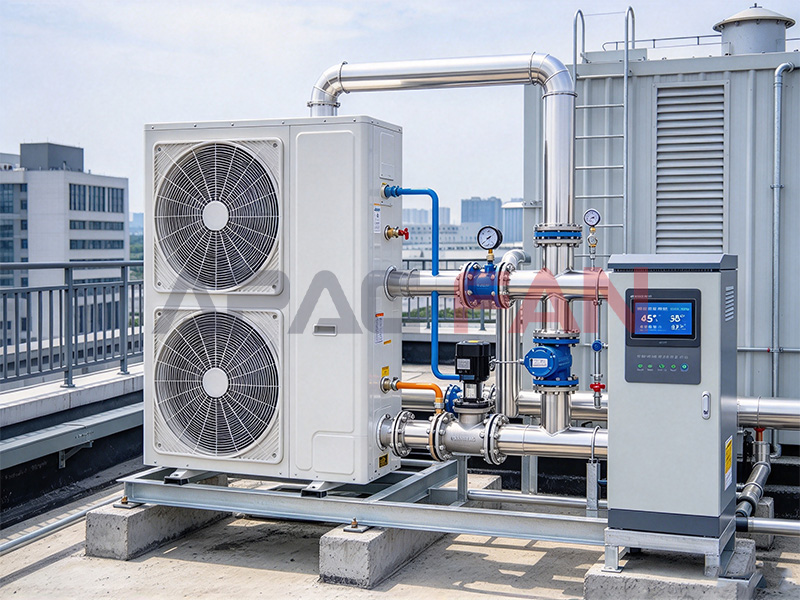
The fan's role is to move air across the outdoor heat exchanger. In a variable-capacity heat pump, the compressor and fan may both change operation as conditions vary. The control relationship is determined by the equipment manufacturer. A fan that accepts variable commands does not automatically know the correct speed for each refrigeration condition.
Relating fan speed to airflow and pressure
The fan's operating point depends on both the fan curve and resistance from the coil, guard and casing. Changing speed changes the available fan performance, but the actual airflow follows the behavior of the installed system. Frost, blocked openings or changes to the casing can alter the resistance and therefore the resulting airflow.
Fan affinity relationships can help engineers estimate trends for similar conditions, but they do not replace measured performance or the manufacturer's selection data. Motor and electronic losses, control limits and operating point changes also affect input power. A reduction in speed should be evaluated at the complete operating point rather than translated into a universal energy saving.
Signals and control wiring
Some EC fans accept a specified analog command; others may use a digital communication interface or a product-specific control arrangement. The required signal range, reference wiring and enable input must match the fan documentation. A voltage present on a wire is not enough to establish that the signal is compatible.
Also review feedback and alarms. A controller may expect a speed output, a fault indication or a particular startup sequence. If the replacement fan does not supply the expected information, the heat pump can report a fault even while the impeller is turning. An interface converter is not automatically suitable; its function and fail behavior must be checked for the system.
Sensors, limits and defrost
The heat pump may use outdoor air temperature, coil temperature, refrigerant conditions or other inputs in its operating logic. The specific sensors and decisions vary by design. The fan must respond to the commands of that logic, including any restriction during startup, protection or defrost.
A minimum speed setting may be needed to maintain the required airflow under a given condition. A maximum limit may relate to the fan, noise, heat exchanger or electrical design. These limits should come from the equipment and fan documentation. Adjusting a controller to make a unit quieter without confirming the required heating duty can create an operating problem.
Electrical compatibility and protection
Check rated voltage, frequency where applicable, current, protective earth and the installation instructions. A speed-control terminal must not be treated as the fan's main power supply. Wiring, isolation and protection devices must be appropriate for the specified fan and local electrical requirements.
Compatibility also includes behavior after a fault or power interruption. Determine whether the fan restarts automatically, waits for an enable command or requires a reset. The overall equipment safety design should account for these behaviors. The details vary among products and should be confirmed from the exact documentation.
Measuring the value of an upgrade
A useful assessment compares the original and proposed configurations at representative heating conditions. Record fan input, required airflow, heat pump operating mode and running hours where practical. Sound and maintenance access may also be relevant to the decision.
A published percentage saving from another project is not a forecast for a different heat pump. The value of variable speed depends on the load profile and how the whole system is controlled. Share the equipment controller, existing fan and intended operating requirements with APAC FAN to review whether a proposed EC fan can meet the application.
Interpreting feedback and actual speed
A speed request and a reported speed are different pieces of information. A controller can issue a command even when a fault, protection limit or enable condition prevents the fan from reaching the requested state. If feedback is available, compare it with the command using the equipment manufacturer's diagnostic method.
Feedback resolution, signal scaling and update intervals vary by product. A replacement must provide the type of feedback the controller expects, not merely a signal that appears to change with speed. Check how the system handles missing, out-of-range or delayed feedback during startup and steady operation.