
















 English
 Français
 Deutsch
 Português
 Español
 русский
 한국어
 العربية
 Italiano
 Indonesia
 Schweiz
 Polski
 Nederlands
 ישראל - עברית
 Perzisch
 ไทย
 日本語
 ኢትዮ-አማርኛ
 Việt Nam
 Kiswahili
 Srpski
 Ελληνικά
 繁體中文
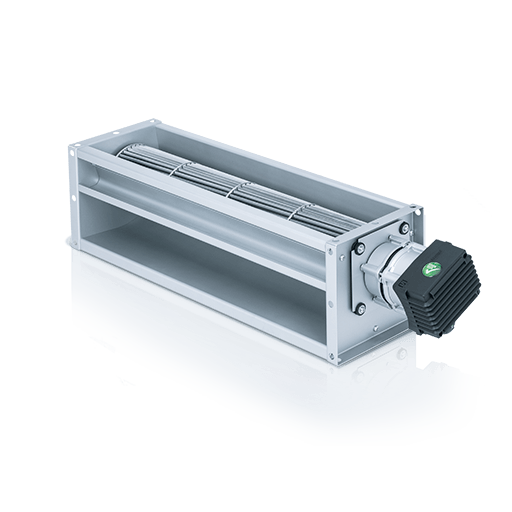
Decentralized Ventilation Fans for Facades and Soffits
10/28/2026Decentralized ventilation can provide air exchange at room level when a building cannot easily accommodate a central duct network. The ventilation device is integrated into the building envelope, bringing the fan close to the room it serves. This makes the relationship between the fan, housing and external opening particularly important.
ebm-papst includes facade and soffit ventilation among its decentralized residential applications. These arrangements offer an alternative to distributing all ventilation air from one central unit, but the appropriate solution depends on the building and the complete equipment design.
Identify how the unit exchanges air
Some decentralized systems alternate the direction of airflow, while others use separate supply and extract paths. The replacement fan must support the actual arrangement. A conventional fan should not be assumed to deliver suitable performance in reverse simply because its motor can be made to rotate differently.
For alternating systems, switching behavior and coordination between units are part of the ventilation concept. For separate air paths, the relationship between supply and extract remains important. The equipment instructions determine how these functions should operate.
Treat the installation as part of the assembly
A compact wall opening can include a sleeve, grille, filter, acoustic components and, where provided, heat recovery elements. Each occupies space and influences the airflow. A replacement that fits the opening may still alter the clearances or air path inside the unit.
The outer opening also interacts with weather and wind. The complete installation must manage these conditions according to its design. A motor protection rating alone does not establish that a bare fan is suitable for direct exposure on a facade.
Balance air exchange with room comfort
Because the equipment is close to the occupied space, operating sound and draught perception can affect everyday use. The position of furniture and the direction of the air outlet deserve consideration alongside the fan's rated performance.
Increasing speed may increase air movement, but it can also increase audible noise. The useful question is whether the complete installed device delivers the required room ventilation at an acceptable operating condition. A maximum airflow figure cannot answer that question alone.
Preserve the original control behavior
Before replacing a fan, identify the ventilation unit, fan part number and controller. Check the supply arrangement, connection details and any timing or direction commands. Filters and recovery components should remain correctly seated after the equipment is reassembled.
Verification should include every intended operating mode. Where units operate as a coordinated group, check their response together. A single unit running correctly in isolation may still be out of sequence with the rest of the room ventilation system.
Prepare a focused enquiry
For APAC FAN replacement support, provide photographs of the installed unit, fan label and connectors, together with the mounting dimensions. Describe whether the system alternates airflow or uses separate fans. Leave an email or WhatsApp number so the relevant fan information can be reviewed with you.