









 English
 Français
 Deutsch
 Português
 Español
 русский
  한국어
한국어 العربية
 Italiano
 Indonesia
 Schweiz
 Polski
 Nederlands
 ישראל - עברית
 Perzisch
 ไทย
ไทย 日本語
日本語 ኢትዮ-አማርኛ
 Việt Nam
 Kiswahili
 Srpski
 Ελληνικά
 繁體中文
繁體中文Energy-Efficient EC Fan Retrofit for an Industrial Cooling Tower
07/16/2026Cooling tower fans play a critical role in heat rejection, water-temperature control, and the stable operation of industrial manufacturing facilities. However, conventional belt-driven fan systems can become increasingly inefficient and maintenance-intensive after years of operation.
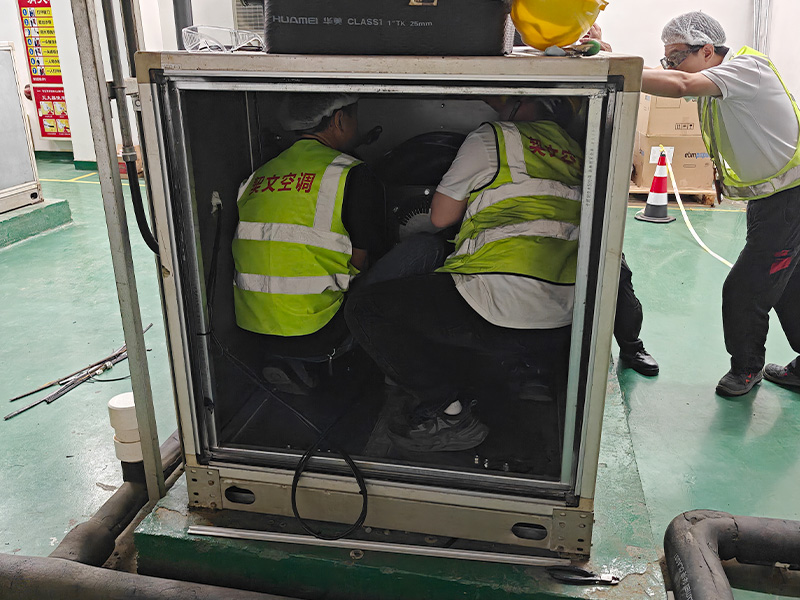
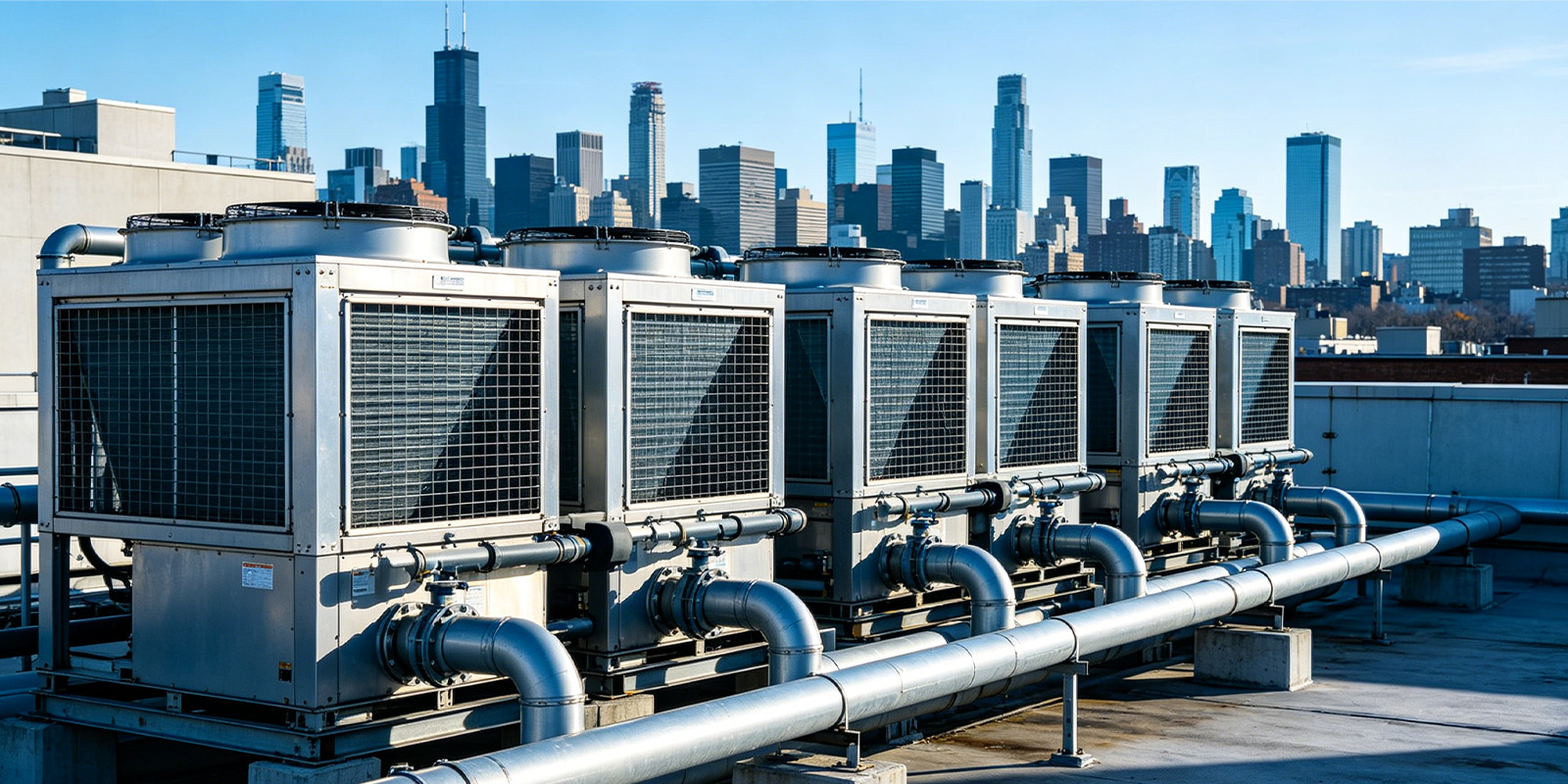
AISA PACIFIC SHENGRUI LIMITED completed an energy-saving upgrade for an industrial manufacturing cooling tower system. The existing installation consisted of three 18.5 kW belt-driven fans with a total installed power of approximately 55.5 kW. To improve energy efficiency and operational control without replacing the entire cooling tower, the original fans were replaced with a high-efficiency EC fan wall.
The upgraded system incorporated intelligent variable-speed control, automatic water-temperature regulation, and Modbus TCP communication. Following the retrofit, measured energy savings exceeded 50%. The new fan wall also improved airflow distribution while reducing noise, vibration, maintenance requirements, and the risks associated with mechanical transmission components.
Challenges of the Existing Belt-Driven Fan System
Although the original cooling tower fans remained operational, their fixed-speed design and belt-drive structure limited overall system efficiency. The fans could not adjust their output accurately according to changes in cooling demand, water temperature, production load, or ambient conditions.
This meant the system could continue consuming substantial amounts of electricity even when full fan capacity was unnecessary. Mechanical components such as belts, bearings, pulleys, and drive assemblies also required regular inspection, tension adjustment, alignment, lubrication, and replacement.
Over time, belt wear, transmission losses, vibration, and component misalignment could reduce operating efficiency and increase the likelihood of unplanned maintenance. These issues created ongoing costs that were not fully reflected by the fans’ rated motor power alone.
EC Fan Wall Retrofit Solution
Before developing the retrofit plan, the engineering team evaluated the cooling tower’s required airflow, available installation space, system resistance, pressure margin, electrical configuration, maintenance access, and control requirements.
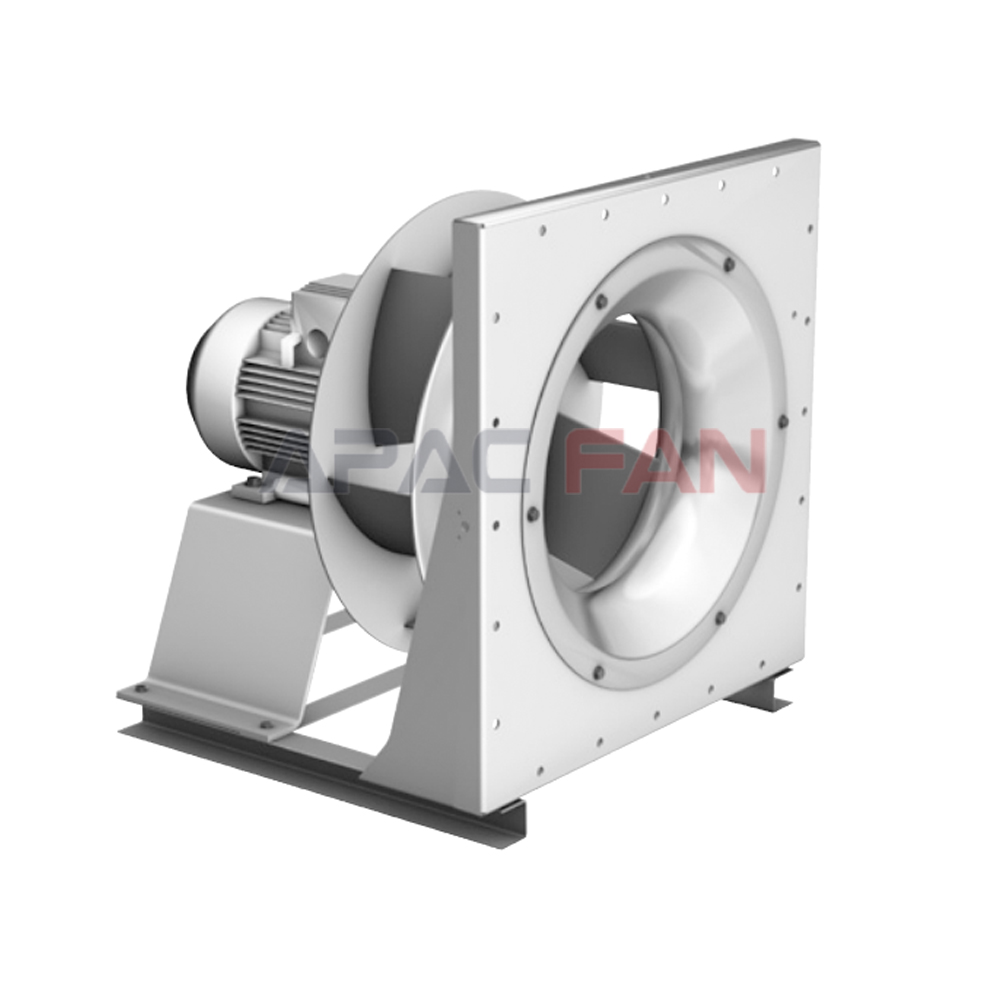
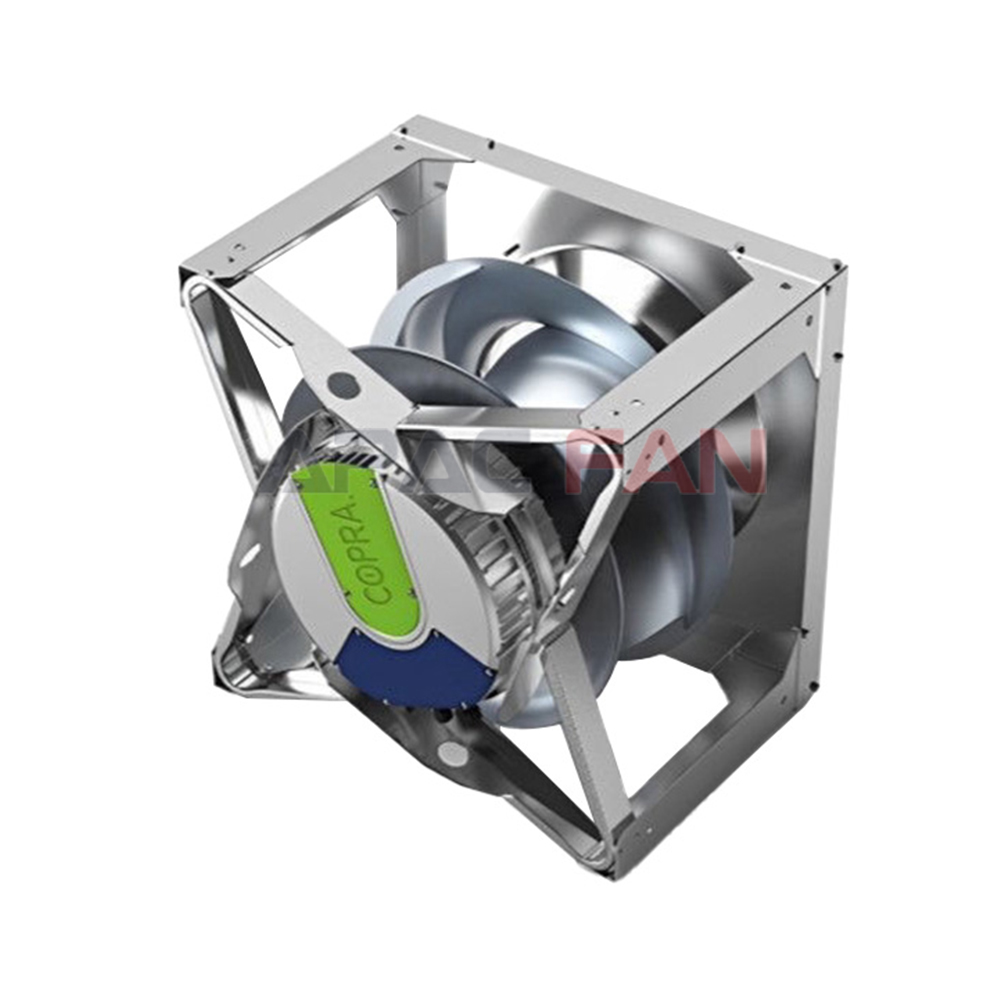
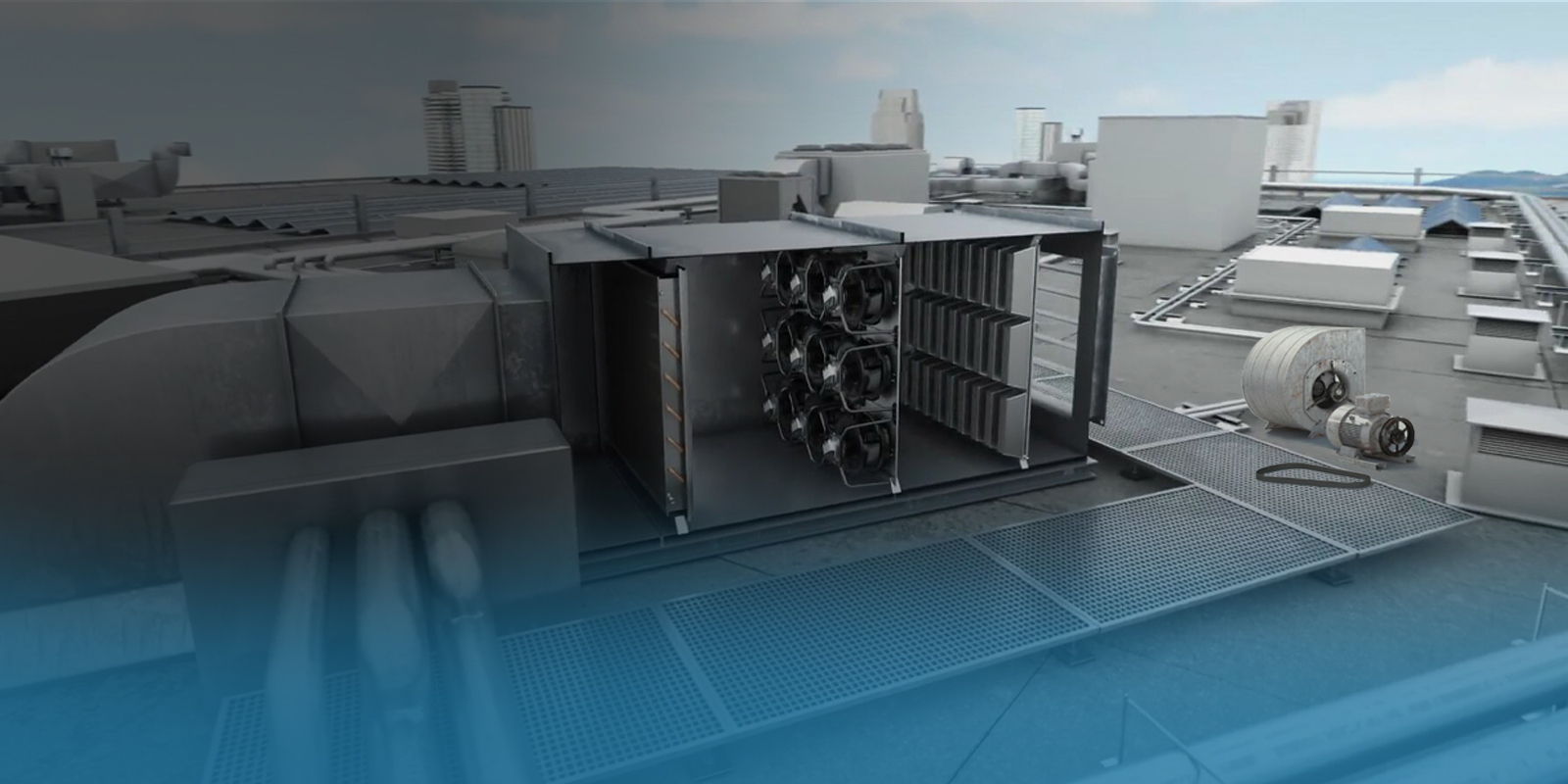
The three original belt-driven fans were replaced with a modular EC fan wall designed to provide efficient and evenly distributed airflow across the heat-transfer area. EC fan technology combines an electronically commutated motor, aerodynamic impeller, and integrated speed-control capability in a compact unit.
Unlike the original fixed-speed system, the EC fan wall can adjust fan output according to actual cooling requirements. Automatic water-temperature regulation allows the system to increase or reduce fan speed in response to operating conditions, avoiding unnecessary power consumption during periods of lower demand.
Modbus TCP communication was also integrated into the system, enabling operating data and control signals to be connected with the facility’s monitoring or building-management platform. This improves visibility and allows operators to manage the cooling system more accurately.
More Than 50% Energy Savings
The retrofit reduced fan-system energy consumption by more than 50% compared with the original 55.5 kW belt-driven installation. The energy reduction was achieved through several improvements, including high-efficiency EC motors, elimination of belt transmission losses, variable-speed operation, and more precise matching between fan output and actual cooling demand.
Variable-speed control is particularly important in cooling tower applications because cooling loads are rarely constant. Production schedules, outdoor temperature, water temperature, and equipment load can all affect the required airflow.
Instead of running at full output continuously, the EC fans can operate at an appropriate speed for the current demand. This helps reduce wasted electricity while maintaining the required cooling performance.
Improved Airflow, Noise, and Vibration Performance
The modular fan-wall arrangement distributes air more evenly across the cooling tower than a limited number of large fans. More uniform airflow can improve heat-exchange utilization and reduce areas with insufficient or excessive air movement.
Removing belts and other mechanical transmission components also helps reduce vibration and mechanical noise. Each EC fan operates as a directly driven unit, eliminating common problems associated with belt tension, pulley alignment, and transmission wear.
These improvements create a more stable operating environment and can reduce the mechanical stress placed on the cooling tower structure.
Lower Maintenance Requirements
Traditional belt-driven cooling tower fans require ongoing maintenance of motors, belts, bearings, pulleys, and drive assemblies. A worn or incorrectly tensioned belt can reduce efficiency, cause vibration, or lead to unexpected downtime.
The direct-drive EC fan wall simplifies the mechanical structure by eliminating belts and pulleys. This reduces the number of wear components and lowers the frequency of routine mechanical maintenance.
The modular design also makes inspection and servicing more manageable. If an individual fan requires attention, maintenance teams can identify and service the affected unit without treating the entire airflow system as a single large assembly. The remaining fans may also provide partial airflow, depending on the system design and operating conditions.
Why Retrofit Instead of Replacing the Cooling Tower?
A complete cooling tower replacement can involve significant capital expenditure, structural work, extended downtime, and changes to connected piping or electrical systems. When the tower body, water-distribution system, and heat-transfer components remain serviceable, replacing only the inefficient airflow system can offer a more practical solution.
A targeted EC fan retrofit allows the facility to retain usable equipment while addressing major sources of energy loss, maintenance workload, and limited control. It can therefore shorten the implementation period and reduce disruption compared with replacing the entire cooling tower.
Long-Term Operational Benefits
The value of an EC fan retrofit extends beyond immediate electricity savings. Intelligent control makes it easier for the cooling system to respond to changes in production demand, seasonal temperature, water conditions, and operating schedules.
Integrated communication also gives facility teams better access to operating information, supporting faster troubleshooting and more informed maintenance decisions. Reduced vibration, fewer mechanical wear components, and modular fan construction can further improve long-term system reliability.
For industrial manufacturing facilities seeking to reduce cooling-system energy consumption without replacing existing equipment, an EC fan wall retrofit can provide an effective balance of efficiency, controllability, maintainability, and investment value.
Conclusion
By replacing three 18.5 kW belt-driven cooling tower fans with an intelligently controlled EC fan wall, AISA PACIFIC SHENGRUI LIMITED helped the facility achieve energy savings of more than 50%. The upgrade also improved airflow uniformity, reduced noise and vibration, simplified maintenance, and enabled automatic water-temperature control with Modbus TCP communication.
This project demonstrates how a carefully planned cooling tower fan retrofit can deliver measurable energy savings while improving the reliability and flexibility of an existing industrial cooling system.