
















 English
 Français
 Deutsch
 Português
 Español
 русский
 한국어
 العربية
 Italiano
 Indonesia
 Schweiz
 Polski
 Nederlands
 ישראל - עברית
 Perzisch
 ไทย
 日本語
 ኢትዮ-አማርኛ
 Việt Nam
 Kiswahili
 Srpski
 Ελληνικά
 繁體中文
How Fans Support Heating in Air Source Heat Pumps
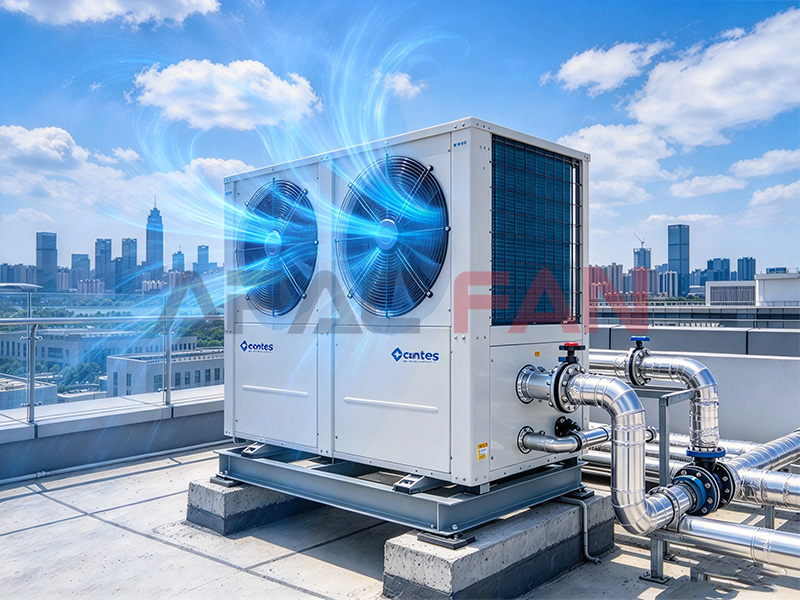
11/09/2026An air source heat pump moves heat from outdoor air into a building. In heating mode, its outdoor fan moves air across the outdoor heat exchanger, allowing the refrigeration system to absorb heat from the air. Even cold outdoor air contains thermal energy, although the amount of heat the complete system can deliver depends on its design and conditions.
Airflow and the outdoor heat exchanger
The fan must move air through the coil and the unit casing. Coil geometry, guards and nearby obstructions affect resistance and the air that reaches the exchanger. If leaves, snow or other material restrict the inlet, the system may struggle to operate as intended. Follow the equipment manufacturer's clearance and maintenance instructions.
More airflow does not automatically produce better system performance. The fan and heat exchanger are designed together, and a change in airflow may affect noise, electrical consumption and operation across different conditions. Compare potential replacements at the required operating point, not only by maximum airflow.
Operation as outdoor conditions change
Outdoor temperature and humidity influence the heat exchanger. Frost can form on the coil in heating mode, and the system may enter a defrost cycle. Fan behavior during defrost depends on the equipment and its controls; it should not be assumed to be the same for all heat pumps.
Some units adjust fan speed in response to operating conditions. Any replacement must work within the manufacturer's control strategy and permitted temperature range. A compatible mounting diameter alone does not establish electrical or functional compatibility.
Information for fan selection
Record the equipment reference, existing fan label, electrical supply, dimensions, mounting arrangement and direction of airflow. The required airflow and pressure, operating temperature, control interface and outdoor exposure also matter. Check how the fan is protected from moisture and whether it can be safely accessed for service.
For selection or replacement support, provide APAC FAN with the fan nameplate, unit details and photographs, together with your email or WhatsApp number. The information helps identify a suitable fan for the actual heat pump application.
How the outdoor fan works with the refrigerant circuit
In heating mode, refrigerant passing through the outdoor heat exchanger absorbs heat from the surrounding air. The compressor raises the refrigerant pressure and temperature, and heat is then delivered to the building through the indoor side of the system. The expansion device prepares the refrigerant for another pass through the outdoor heat exchanger. These components form a circuit, so the fan supports the heat transfer process rather than creating the heat on its own.
The air leaving the outdoor unit is typically cooler than the air entering it while the heat pump is extracting heat. The difference depends on airflow, heat transfer, outdoor conditions and the operating state. It should not be used by itself as a pass-or-fail test for the fan. A technician needs the manufacturer's diagnostic procedure and measurements at the prescribed locations.
Outdoor airflow and system resistance
The outdoor coil, inlet opening, protective guard and discharge arrangement all influence the resistance seen by the fan. An operating point is established where fan performance and system resistance meet. A fan curve describes performance across a range of conditions; the maximum airflow value generally describes a different point from the installed duty.
For equipment designers, the relevant question is whether the selected fan delivers the required airflow through the complete assembly over the specified operating range. For replacement projects, the original equipment data and the selected fan's performance information provide a more reliable basis than impeller diameter alone. A change in guard, coil or housing can also change the installed airflow even if the same fan is retained.
Variation during a heating season
Heating demand varies with weather, building occupancy and the desired indoor temperature. A heat pump may change compressor operation and, where designed to do so, outdoor fan speed. The optimal combination is determined by the unit controls and the refrigeration system. A fan that can physically rotate at a different speed is not necessarily approved to operate at that speed in a particular heat pump.
Seasonal performance also reflects startup, cycling, defrost and any auxiliary heat. Fan input is one part of the system's electrical consumption. When evaluating an upgrade, measure or estimate performance across representative conditions rather than applying a catalogue efficiency number to the whole heating season.
Installation conditions that affect the fan
The outdoor unit needs the inlet and discharge clearances specified by its manufacturer. A fence, wall or enclosure can restrict air movement or encourage discharged air to mix with the inlet air. In a heating application, that recirculation can reduce the temperature of air reaching the coil. The effect depends on the layout and cannot be predicted from a single clearance dimension alone.
Maintenance access is equally relevant. A service technician should be able to inspect the fan and coil, isolate the unit and remove the assembly if necessary. Snow, leaf accumulation and falling debris should be considered when planning the location. Protective structures must be designed so that they do not obstruct the required air path.
What distinguishes a suitable outdoor fan
A suitable fan combines the required aerodynamic duty with the specified power supply, control behavior, environmental protection and mechanical mounting. The fan's permitted ambient range and the complete unit's operating range are separate specifications. Check the motor, electronics, cable and connections as a system, particularly when exposure to moisture or freezing conditions is expected.
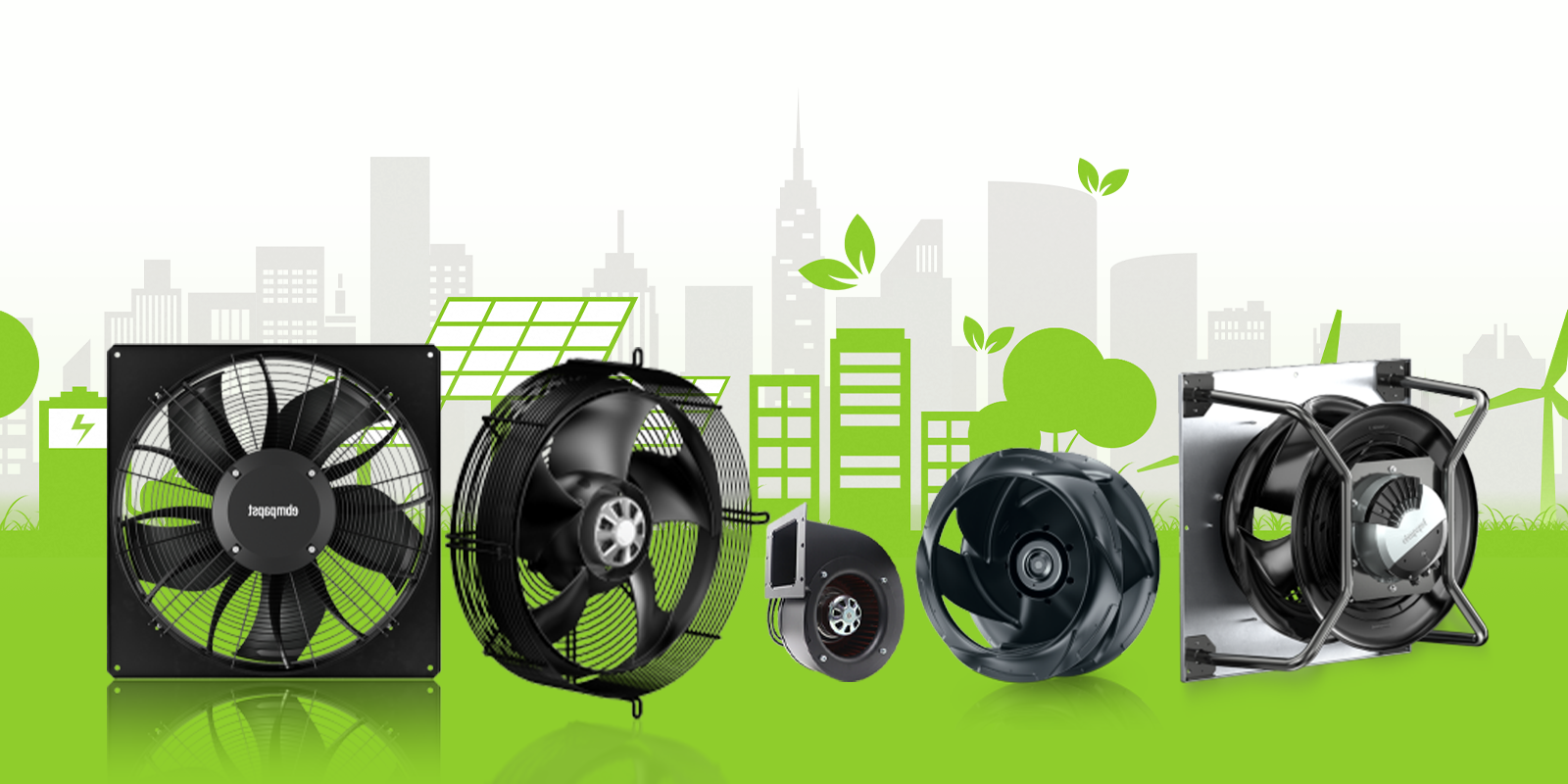
The ebm-papst portfolio includes fans used in heat pump applications, but the appropriate product depends on the unit's requirements. Product family names are useful starting points for discussion; they do not establish the suitability of a particular assembly for every heat pump. Confirm the exact data sheet and the equipment manufacturer's requirements before ordering.
Questions for a heating project
Before comparing fans, identify whether the project is a new equipment design, a like-for-like replacement or a proposed retrofit. New equipment designers may have a defined pressure requirement and a target operating profile. A service team may instead have the original fan number and an immediate need to restore an existing unit. These situations call for different information and verification steps.
If the original fan has failed, record the circumstances as well as the part number. Repeated failure can point to an underlying installation, electrical or environmental condition that a replacement alone will not solve. Share photographs and any available fault history with APAC FAN so the enquiry can address the actual equipment and operating conditions.
Planning measurements for an operating system
Measurements are most useful when the operating mode and weather conditions are recorded alongside them. A service team comparing before-and-after performance should note outdoor temperature, compressor state, fan command and the location of each measurement. If the system is cycling or defrosting during a reading, that context should be included in the record.
A single measurement does not establish seasonal performance. For a purchasing decision, combine representative operating data with the actual fan's published specifications and installation constraints. If the heat pump manufacturer specifies a testing method, that procedure takes precedence over a generic field comparison.