

















 English
 Français
 Deutsch
 Português
 Español
 русский
  한국어
한국어 العربية
 Italiano
 Indonesia
 Schweiz
 Polski
 Nederlands
 ישראל - עברית
 Perzisch
 ไทย
ไทย 日本語
日本語 ኢትዮ-አማርኛ
 Việt Nam
 Kiswahili
 Srpski
 Ελληνικά
 繁體中文
繁體中文Corrosion-Resistant Fans for Coastal Precision Cooling
09/08/2026Why Coastal Air Is Hard on Cooling Equipment
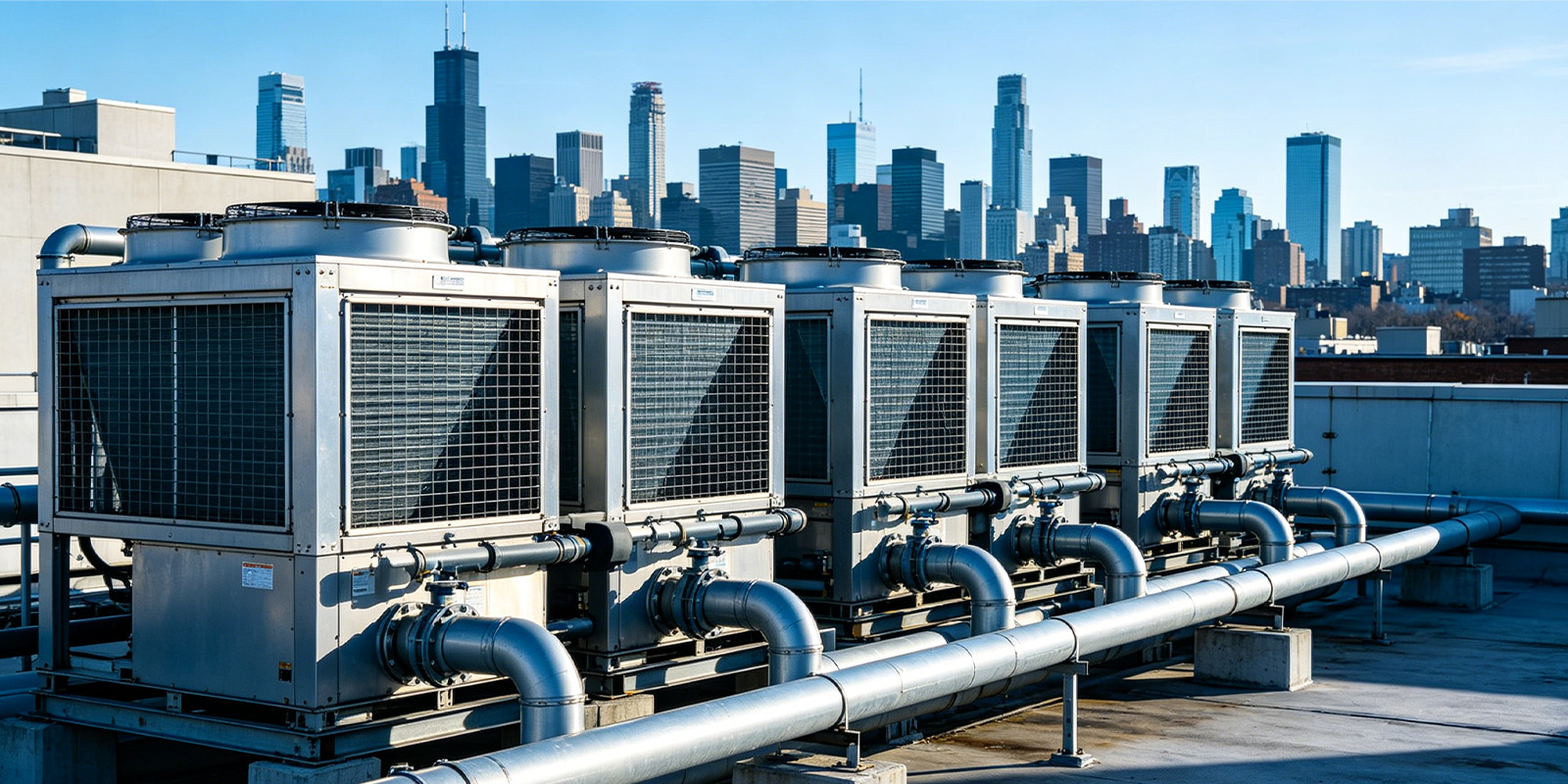
Coastal sites expose precision cooling equipment to salt-bearing air, high humidity, frequent condensation, and sometimes industrial pollutants. Salt attracts moisture and creates an electrically conductive film on metal and electronic surfaces. Corrosion can begin at small coating defects, fastener interfaces, cut edges, and electrical terminals.
Fans are especially exposed because they continuously move contaminated air through the unit. Damage may affect the impeller, motor housing, bearings, guards, mounting frame, fasteners, connectors, and integrated drive electronics. A standard indoor fan may deteriorate quickly even when the room itself appears clean.
Selecting Impeller and Structural Materials
Material choice depends on the contaminant level, temperature, mechanical stress, and expected service life. Engineering plastics can resist many corrosive environments and reduce weight, but chemical compatibility and temperature limits must be checked. Aluminum offers low mass but may require suitable treatment where salt exposure is severe.
Stainless steel can provide strong resistance for shafts, guards, and fasteners, although grade selection and contact with dissimilar metals matter. Coated carbon steel can be economical when preparation, edge coverage, and coating thickness are controlled.
Coatings and Surface Treatments
Protective systems may include powder coating, electrophoretic coating, anodizing, conversion coatings, plated fasteners, and specialized marine finishes. The coating must cover difficult areas such as blade edges, welds, seams, holes, and cut surfaces. A visually attractive finish does not guarantee protection if adhesion or preparation is poor.
The coating also needs to tolerate vibration, cleaning products, ultraviolet exposure where applicable, and the operating temperature of the motor. Supplier test data should relate to the actual coating system and substrate used in production.
Protecting Motors and Electronics
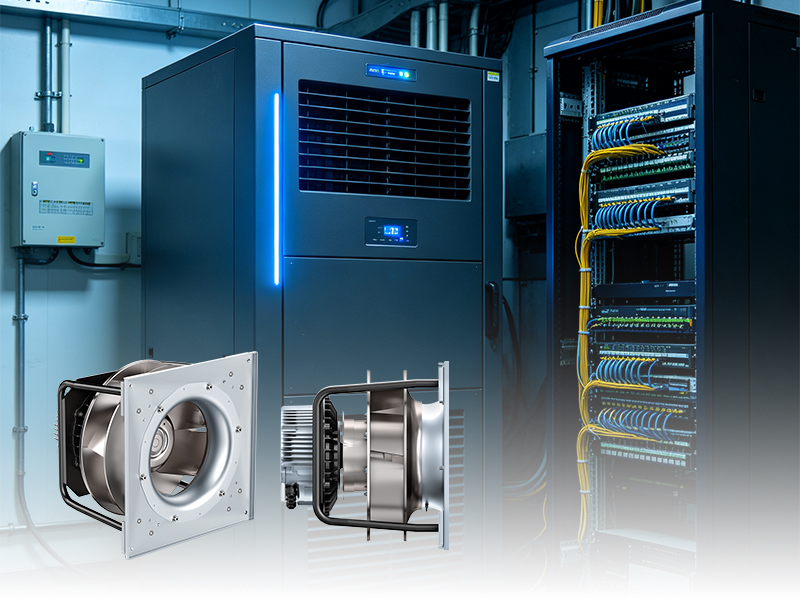
Motor windings, printed circuit boards, connectors, and sensors can fail before major structural corrosion becomes visible. Enclosures, seals, conformal coating, protected terminals, and suitable cable glands reduce exposure. The declared ingress-protection rating should match the mounting orientation and the real path of moisture.
Drainage is essential because sealing alone cannot prevent every moisture event. Cable routing should include drip loops where appropriate, and connectors should not sit in low points where water can collect.
Cabinet Design and Installation
A corrosion-resistant fan cannot compensate for a cabinet that traps water or draws untreated outdoor air across vulnerable components. Sloped surfaces, drain paths, separation of wet and dry zones, accessible filters, and controlled ventilation improve durability. Avoid galvanic couples between dissimilar metals, especially where conductive salt deposits can bridge the joint.
Installation near an air intake, open door, rooftop edge, or cooling-tower discharge may create much greater exposure than the site's distance from the sea suggests. A site survey should identify the actual contaminant path.
Testing and Maintenance Strategy
Salt-spray testing can compare protective systems, but laboratory hours should not be treated as a direct prediction of field life. Cyclic humidity, drying, temperature changes, abrasion, and real contaminants influence performance. Acceptance criteria should address blistering, rust, coating adhesion, electrical function, and balance.
Routine inspection should focus on coating damage, fasteners, terminals, drainage, deposits, and early bearing symptoms. Gentle cleaning before heavy deposits form can extend service life. Coastal reliability comes from coordinated material selection, enclosure design, drainage, installation, and maintenance.
Conclusion
Coastal fan durability is created by a system of compatible materials, coatings, protected electronics, drainage, careful installation, and early inspection rather than by one corrosion-resistant component.