















 English
 Français
 Deutsch
 Português
 Español
 русский
  한국어
한국어 العربية
 Italiano
 Indonesia
 Schweiz
 Polski
 Nederlands
 ישראל - עברית
 Perzisch
 ไทย
ไทย 日本語
日本語 ኢትዮ-አማርኛ
 Việt Nam
 Kiswahili
 Srpski
 Ελληνικά
 繁體中文
繁體中文Rear Door Heat Exchanger Fans: Airflow at the Rack Boundary
08/28/2026Why the rack boundary matters
Rear door heat exchangers change the cooling conversation by moving heat capture closer to the rack. Instead of letting hot exhaust mix into the room and then pulling it back through a perimeter unit, the rear door places a coil directly in the exhaust path. This can be valuable for high-density racks, retrofit situations, and hybrid environments where not every rack justifies direct liquid cooling.
Fans enter the discussion because a rear door adds resistance. Air must pass through the server chassis, cable area, door structure, heat exchanger coil, and often a protective grille. If the rear door is passive, the server fans carry most of that pressure burden. If the rear door is active, additional fans help manage the airflow path. Neither approach is automatically superior. The best design depends on rack density, IT equipment, coil performance, and acceptable pressure interaction with server fans.
Active versus passive rear door behavior
A passive rear door is mechanically simple, but it relies on the installed IT equipment to push air through the added resistance. That may be acceptable in some racks and risky in others. Server fan control systems are designed to protect server components, not necessarily to optimize the facility cooling system. When a rear door adds too much pressure drop, server fans may run harder, increasing IT fan energy and potentially affecting acoustics.
An active rear door uses fan assistance to reduce that burden or to create a more controlled exhaust path. The fan application must be delicate. Too little assistance may not solve the pressure problem. Too much assistance may pull air unevenly or interfere with server airflow. Active rear door fan control should therefore be coordinated with measured rack conditions rather than treated as a fixed-speed accessory.

ebm-papst products mentioned in RDHx contexts
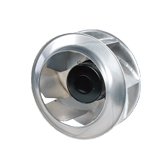
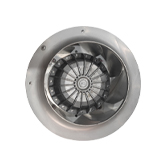
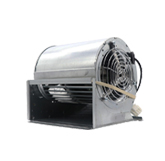
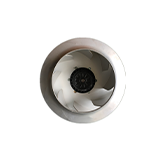
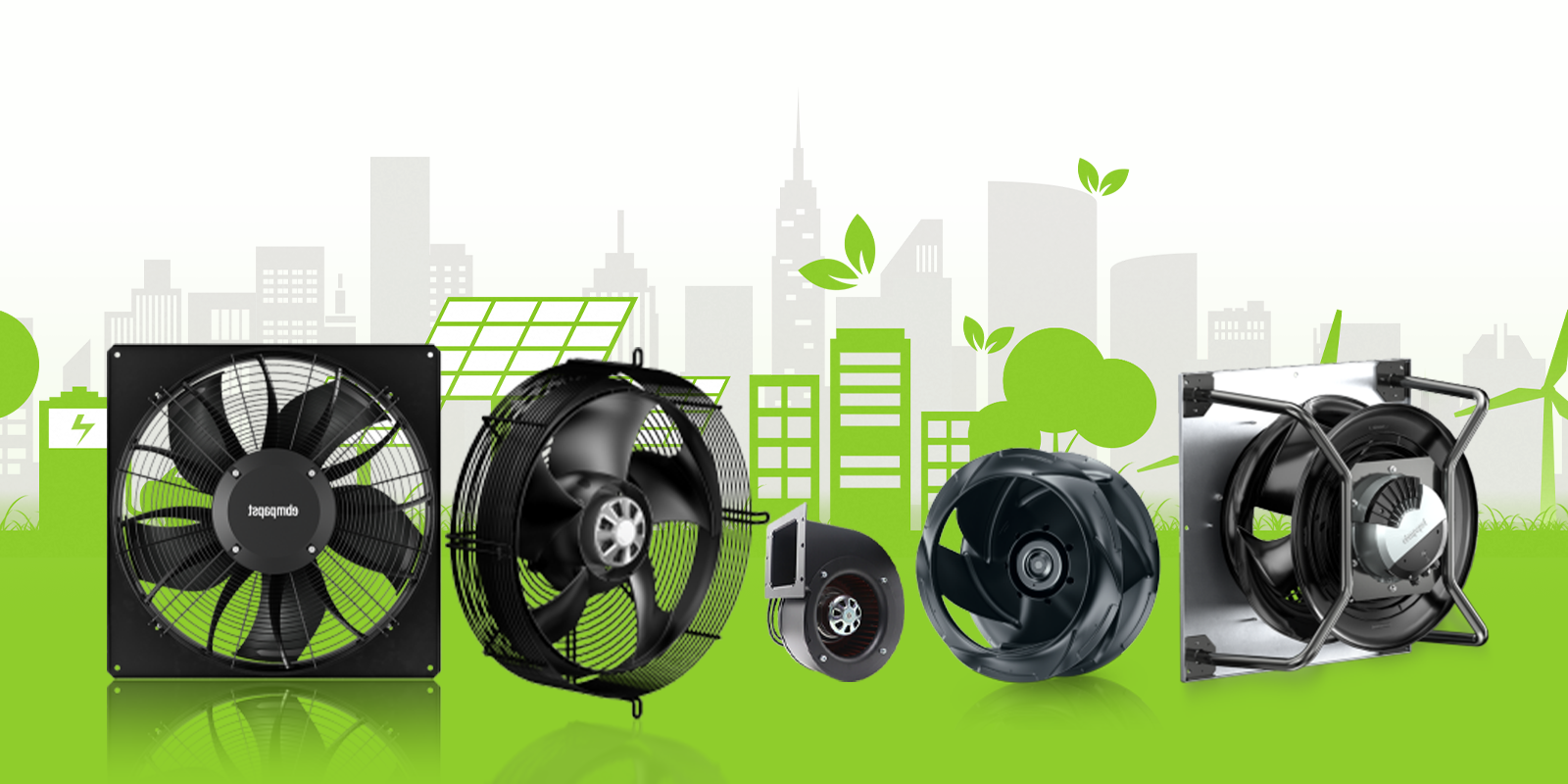
ebm-papst GB data centre materials describe AxiEco 200 as built for high-pressure applications and list in-row cooling and rear door heat exchanger use. The same materials describe RadiCal as a compact centrifugal module suited to RDHx and liquid-to-air cooling contexts. These statements give a factual basis for discussing ebm-papst in RDHx applications without inventing project-specific performance numbers.
The correct application still requires sizing. A product series being listed for RDHx does not mean every size or variant is correct for every rear door. Engineers must check the duty point, voltage, control method, environmental conditions, acoustic target, and redundancy expectations. They should also verify current data sheets because manufacturer ranges and approvals can change.
Airflow interaction with servers
The most important RDHx fan question is how the door interacts with server fans. Servers automatically adjust their internal fans based on component temperature, inlet conditions, and pressure environment. If a rear door changes exhaust pressure, the server may respond by changing speed. The facility may save energy at the cooling unit while increasing energy inside the IT load, which can be a poor trade if not measured.
A good commissioning plan should trend server inlet temperatures, server fan speeds where available, rear door water temperatures, rear door fan speeds, and room conditions. It should test normal load, partial load, maintenance states, and failure modes. If the rear door fan fails, will the rack remain within safe limits long enough for alarm response? If one module is replaced, will airflow short-circuit through the open area? These are practical questions, not theoretical details.
Where RDHx fan applications are strongest
Rear door heat exchanger fans are most useful when they solve a local rack problem without forcing a whole-room redesign. They can help support high-density zones, reduce heat spill into hot aisles, and delay more invasive infrastructure changes. They also fit data halls where liquid cooling is being introduced gradually and air cooling must continue to serve mixed IT equipment.
The best RDHx applications are not just equipment purchases. They are airflow projects at the rack boundary. The fan, coil, controls, water loop, rack cable management, and maintenance process all work together. When those pieces are coordinated, rear door fan systems can become a bridge between traditional air cooling and the more liquid-assisted architectures now appearing in high-density data centers.
Application perspective
Cable management is a major RDHx detail. Rear doors sit where technicians already need access to network and power cables. If cables block the exhaust path or make the door difficult to close, the thermal design suffers. Fan-assisted rear doors should therefore be evaluated with the actual rack configuration, not only with an empty cabinet.
Water-side risk also matters. A rear door heat exchanger brings cooling water close to IT equipment, even if the design is mature and widely used. Fans, controls, leak detection, service clearances, and maintenance procedures should all be considered together. The best RDHx deployment is one where airflow and water management are both boring in the best possible way: predictable, documented, and visible to operators.
Another design point is the thermal behavior of neighboring racks. A rear door may reduce heat release from one high-density cabinet, but adjacent racks still interact through aisle airflow and containment quality. If only selected racks receive active rear doors, the facility should check whether exhaust patterns remain balanced. The fan system should solve the targeted rack problem without creating unexpected recirculation, noise, or pressure imbalance for the rest of the row.
FAQ
Q: What is a rear door heat exchanger?
A: It is a heat exchanger mounted at or near the rear of a rack to remove heat from server exhaust air before that heat enters the room.
Q: Do all rear door heat exchangers need fans?
A: No. Some are passive and rely on server fans, while others are active and include fan assistance. The correct approach depends on pressure drop, rack density, redundancy, and facility design.
Q: Why are compact pressure-capable fans relevant?
A: Rear door systems can have limited space and local resistance from coils or grilles. Compact fans with suitable pressure capability may help maintain airflow through the rack boundary.
Q: Where does ebm-papst connect fans with RDHx?
A: ebm-papst data centre materials describe AxiEco 200 as suitable for in-row cooling and RDHx, and RadiCal as suitable for RDHx and liquid-to-air cooling contexts.
Q: What should be checked before adding fans to a rear door system?
A: Check server fan interaction, pressure drop, airflow direction, redundancy, power connection, acoustic impact, service access, and failure behavior.