
















 English
 Français
 Deutsch
 Português
 Español
 русский
 한국어
 العربية
 Italiano
 Indonesia
 Schweiz
 Polski
 Nederlands
 ישראל - עברית
 Perzisch
 ไทย
 日本語
 ኢትዮ-አማርኛ
 Việt Nam
 Kiswahili
 Srpski
 Ελληνικά
 繁體中文
Chimney and Tunnel Ventilation Fans for Livestock Buildings
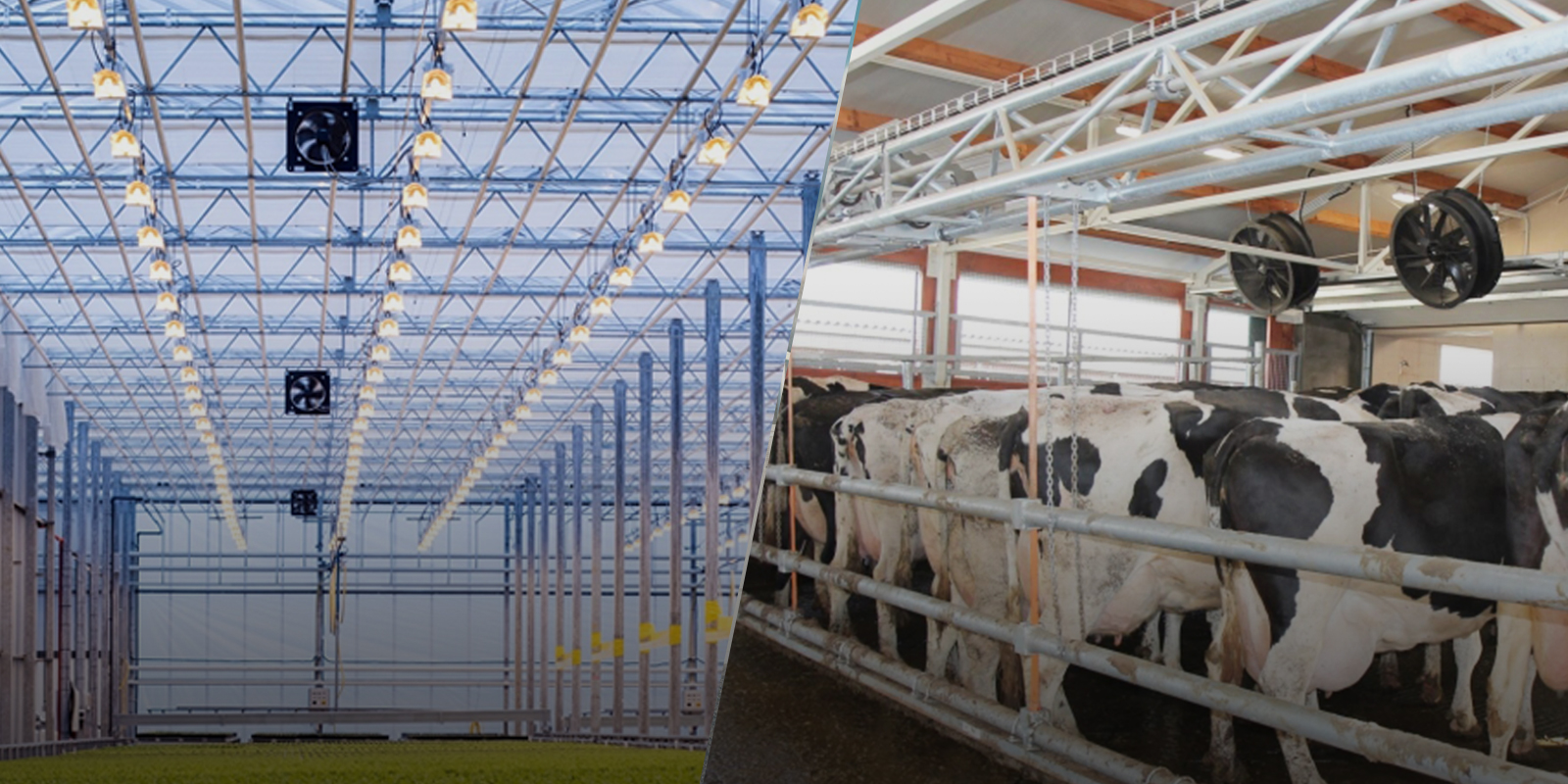
11/05/2026Livestock buildings require ventilation that responds to the building, animals and weather conditions. The fan arrangement determines how air enters, passes through the occupied area and leaves. Chimney and tunnel ventilation create different airflow paths, so fan selection should begin with the intended system layout.
ebm-papst identifies both arrangements as applications for its agricultural EC axial fans. For an individual farm, suitability still depends on the exact product, environmental conditions and required operating range. A series name does not replace a building ventilation assessment.
Understand the chimney airflow path
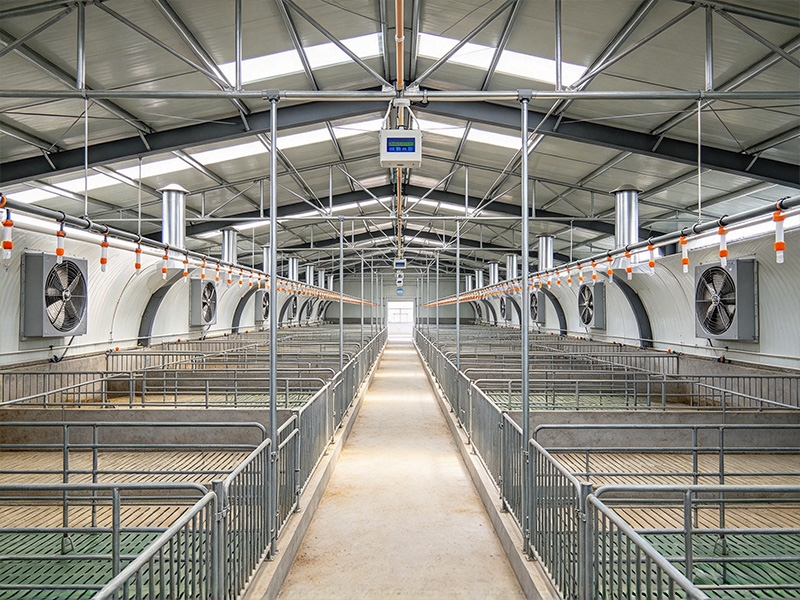
In a chimney arrangement, exhaust air leaves through vertical outlets. The supply openings and extract locations need to work together so that incoming air reaches the intended areas. Poorly distributed inlet air can limit the usefulness of an otherwise capable exhaust fan.
The chimney structure and its fittings add resistance. Fan performance should therefore be checked with the intended installation, including relevant dampers, guards and outlet components. A rating for a bare fan may not describe the installed exhaust performance.
Understand the tunnel airflow path
Tunnel ventilation generally draws air along the length of the livestock building toward an exhaust fan bank. The building cross section, inlet area and leakage influence the resulting air movement through the animal zone.
If the installation includes evaporative cooling pads or other inlet equipment, their resistance belongs in the selection. Adding extract capacity without reviewing the inlet side can prevent the system from delivering the intended airflow pattern.
Provide a useful operating range
Animal size, stocking conditions and external weather can change ventilation demand. The control strategy needs to cover both lower ventilation requirements and higher demand conditions. The appropriate limits must be established for the animals and building concerned.
Variable speed and staged fan operation are possible approaches, depending on the design. Review sensor inputs, fan coordination and the response to a fault. A speed command alone does not prove that the building receives the required air exchange.
Check exposure and resilience
Dust, moisture and substances present in livestock buildings can affect equipment. Verify materials, protection, permitted cleaning methods and temperature limits for the exact fan assembly. Agricultural suitability should be documented rather than inferred from a large impeller or outdoor appearance.
Where mechanical ventilation is essential, the farm's design must address power loss and equipment failure. Alarms, backup arrangements and emergency actions require a complete system plan; they are not provided automatically by choosing an EC motor.
Request a fan review for the building
Send APAC FAN the existing fan reference, building dimensions, ventilation arrangement and required duty. Describe inlet equipment, environmental exposure and control requirements. With your email or WhatsApp number, this information supports a more accurate review of fan specifications and replacement options.