














 English
 Français
 Deutsch
 Português
 Español
 русский
  한국어
한국어 العربية
 Italiano
 Indonesia
 Schweiz
 Polski
 Nederlands
 ישראל - עברית
 Perzisch
 ไทย
ไทย 日本語
日本語 ኢትዮ-አማርኛ
 Việt Nam
 Kiswahili
 Srpski
 Ελληνικά
 繁體中文
繁體中文Improving AHU Systems for Stable, Efficient Operation
07/02/2026Many air handling units continue to run for years after the building or process load has changed. Filters become dirty, coils age, production schedules shift, and operators add equipment to the same space. These changes can reduce reliability and increase energy cost.
Improvement does not always require a complete replacement. In many cases, performance can be improved by reviewing the airflow path, fan operating point, control strategy, and maintenance records. This is especially important for commercial buildings, clean rooms, factories, hotels, hospitals, and large public facilities.
Why Optimization Is Often Needed
Even when air handling units were selected correctly at the beginning, the original design condition may no longer match the current site. Production lines expand, server density increases, filters are upgraded, rooms are re-partitioned, or the operating schedule becomes longer. These changes can push the system away from its intended operating point.
Optimization begins with observation. Before replacing major equipment, it is useful to record temperature trends, pressure readings, fan speed, electrical current, noise complaints, maintenance history, and alarm frequency. This information often shows whether the main problem comes from capacity, airflow resistance, control logic, or component aging.
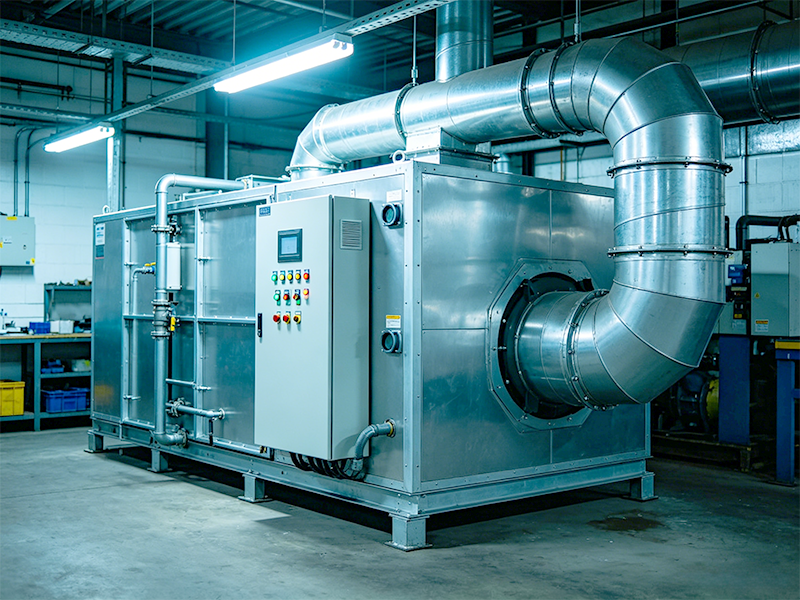
From Component Upgrade to System Improvement
Replacing a fan, motor, filter, coil, or control component can improve performance, but only if it is matched to the whole system. For example, a more powerful fan may increase airflow, but it can also increase noise and energy use if the duct or cabinet resistance is not addressed. Similarly, a high-efficiency component may not save much energy if it is forced to run at a poor operating point.
The best results usually come from combining several small improvements: cleaning or reducing resistance, correcting airflow paths, improving speed control, setting realistic alarms, and training maintenance teams to watch the right indicators. For ahu systems, this system-level approach is more reliable than focusing on one component alone.
|
Improvement Area |
Common Problem |
Recommended Action |
|
Fan efficiency |
Fans can become a major energy consumer in air handling units. |
Evaluate EC fans, VFD control, impeller condition, and operating point. |
|
Pressure loss |
Dirty filters, blocked coils, or undersized ducts can force the system to run harder. |
Measure differential pressure and clean or redesign high-resistance sections. |
|
Reliability |
Continuous-duty systems need stable components and early fault detection. |
Use speed feedback, vibration checks, temperature alarms, and preventive inspection. |
|
System balance |
Uneven airflow creates hot spots, comfort issues, or unstable process conditions. |
Balance branches, confirm airflow direction, and verify commissioning data. |
Optimization Roadmap
- Collect baseline data: temperature, pressure, airflow, power, alarm history, and operating hours.
- Identify resistance points such as filters, coils, ducts, louvers, or blocked inlets.
- Check whether variable speed control or more efficient fan technology can reduce energy use.
- Verify results after adjustment so the system remains stable under peak and part-load conditions.
A practical retrofit plan should separate urgent reliability issues from long-term efficiency improvements. For example, a failing bearing, blocked filter, or unstable temperature alarm should be handled quickly. After the system is safe and stable, engineers can evaluate whether fan upgrades, control tuning, or heat-exchanger cleaning will create measurable savings.
Documentation is another underrated part of optimization. When every adjustment is recorded, the maintenance team can compare before-and-after data and avoid repeating the same fault investigation. For air handling units, this creates a clearer path from problem discovery to corrective action.
The goal is not only to reduce electricity cost. A better ahu systems strategy should improve system stability, reduce emergency maintenance, and support safer long-term operation.
FAQ
Why does ahu systems reliability decline over time?
Reliability usually declines because of dust, blocked heat exchangers, bearing wear, poor airflow balance, sensor drift, or operation outside the original design condition.
How often should maintenance be performed?
The interval depends on environment and operating hours. Critical systems should use planned inspection, pressure checks, cleaning records, and alarm trend review.
Can fan replacement improve performance?
Yes, if the original fan is inefficient, worn, noisy, or poorly matched to system pressure. The replacement must be selected by airflow and static pressure, not size alone.
What data is needed before optimization?
Useful data includes heat load, airflow, pressure, voltage, noise limits, working temperature, operating hours, fault history, and installation photos.